

MDP manufacturing and research, 2021–23
What we learned making MDP from 3D prints, stainless steel, acrylic and steel.
Our team spent 2021–23 researching and testing ways to manufacture MDP. We tried plastics, stainless steel, concrete, bamboo fibre and ceramics, and verified repeatedly that each method gives continuous, non-clogging drainage.
To improve reliability we 3D-printed physical models and built a 3D predictive model that simulates slope drainage, forecasting flow, efficiency and pressure changes under different conditions.
The tests and simulations showed that MDP is not limited by diameter or material, though materials that rust or deform are not recommended. Through this work we also refined the proportions that give the best drainage.
3D-printed MDP
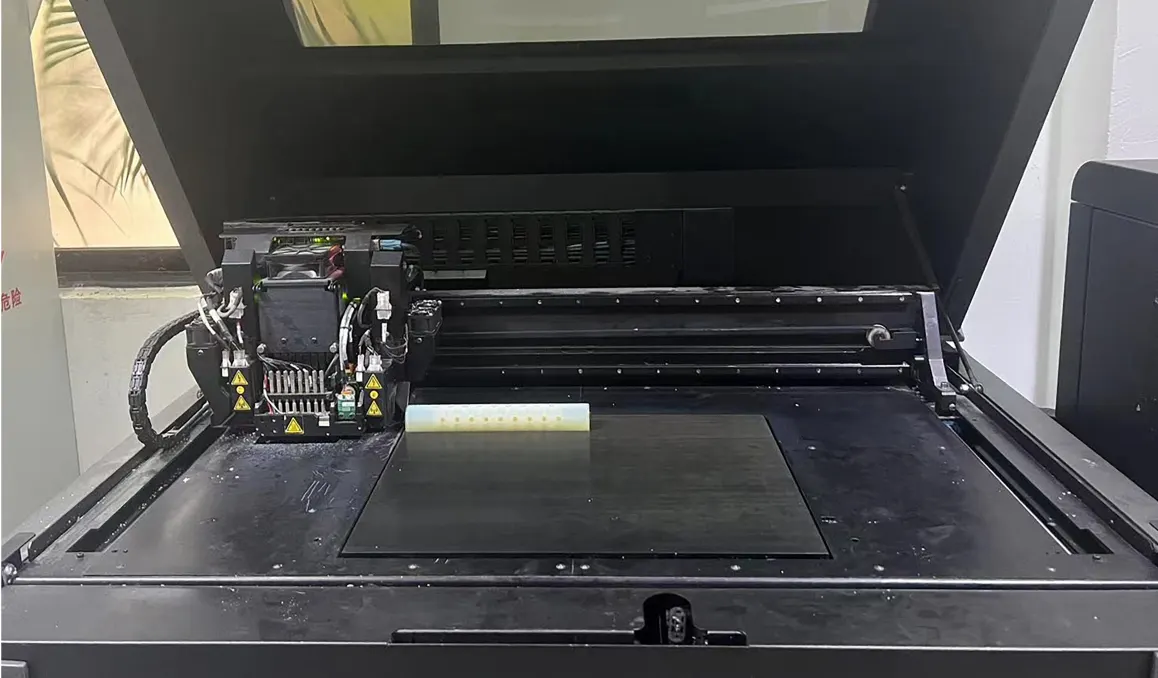
3D printing gave us exact proportions and the best drainage results. We printed walls as thin as 1 mm in Digital ABS, a non-permeable material. The design stays strong even at that thickness.
| Printer | Stratasys, PolyJet |
| Material | Digital ABS |
| Print time | 3 hours |
| Tensile strength | 55–60 MPa (D-638-03) |
| Flexural strength | 65–75 MPa (D-790-03) |
| IZOD notched impact | 90–110 J/m (D256-06) |
| Heat deflection | 100 °C (D-648-06) |
Stainless steel, acrylic and PVC
We made a very fine stainless steel version only 6 mm in diameter, made with laser cutting. It showed that MDP works even at very small diameters.
Hand-assembled acrylic is the lowest-cost method, and plenty of off-the-shelf parts fit. Ordinary PVC pipe in standard market diameters also drained well.
Large-scale steel
For engineering use we built an oversized steel MDP inside a large container as a temporary water filter. Because it was temporary, we used ordinary steel that rusts, which kept cost down, and the steel can be recycled afterwards.
We'll keep researching to improve MDP and widen its applications.