

Why drains clog, and how MDP keeps flowing
What goes wrong with conventional subsurface drains, and what MDP is designed to do differently.
Most subsurface drainage in Hong Kong relies on perforated pipes wrapped in filter fabric and laid in gravel. It works well on day one. The trouble starts later.
How conventional drains fail
- Fines migration. Seepage water carries fine silt and clay toward the pipe, slowly filling the gravel and the perforations.
- Filter blinding. The fabric meant to keep soil out gradually clogs itself, until water can no longer pass through.
- Biofouling and deposits. Bacteria, roots and iron or calcium deposits build up in the openings, especially where water sits still.
- Out of sight. Buried drains are rarely inspected. Failure is usually noticed only when water backs up or a slope shows distress.
The result is a drain that looks fine on the drawing but carries less water every year.
What MDP is designed to do differently
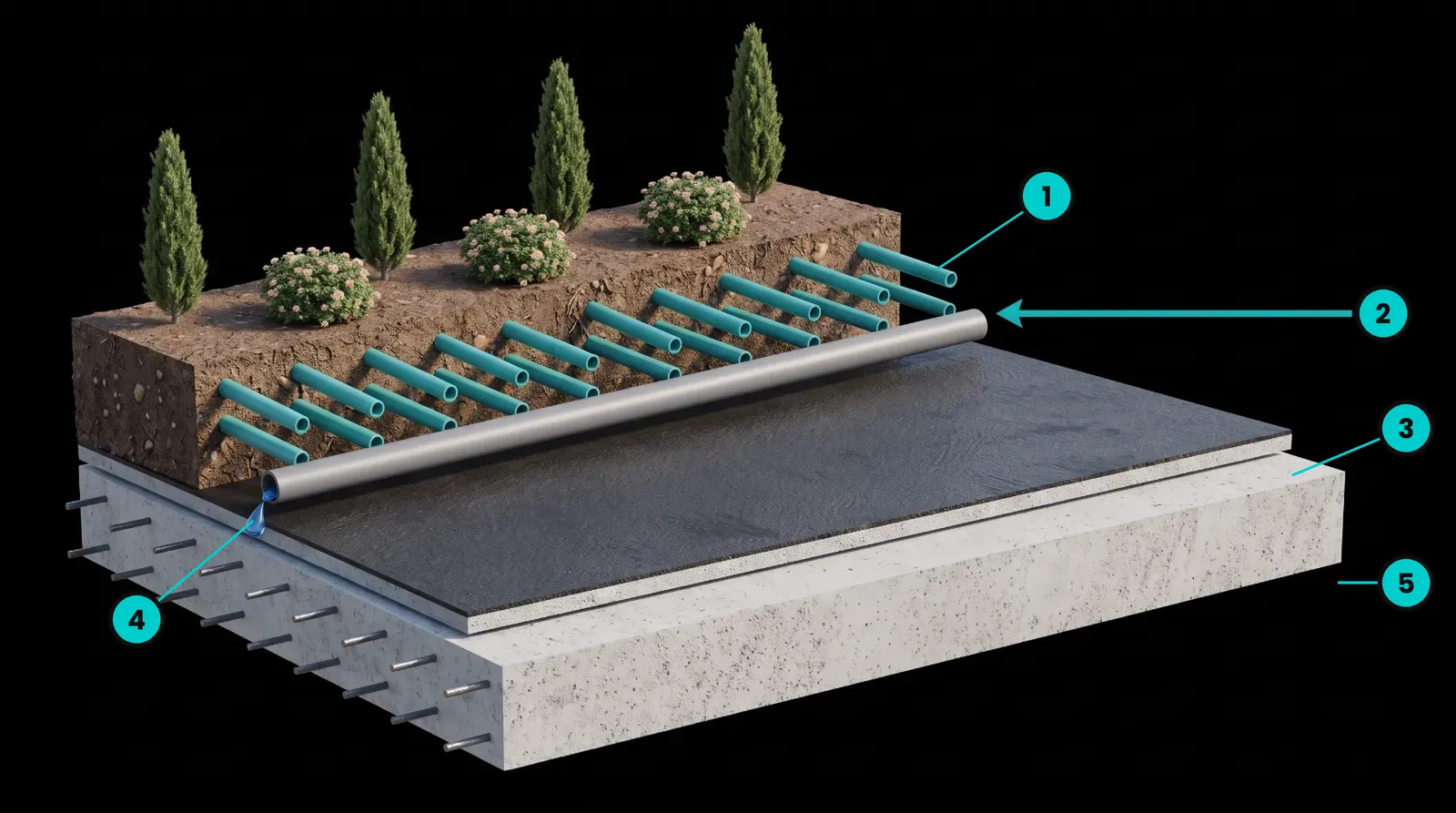
MDP grew out of years of dealing with clogged drains on site. It is designed to keep water moving while holding soil back, so it can be laid directly in the soil without a gravel bed or filter fabric. In our tests it has kept draining continuously where conventional perforated pipe clogged.
- Continuous drainage, with no filter layer to blind
- Laid directly in soil, saving excavation, gravel and fabric
- Works across sizes and materials, from 6 mm stainless steel to large steel units
- Suits slopes, roofs, planters, dewatering and water treatment
What we are testing next
We are running longer-term monitoring of flow and clogging in different soils, including the fine, silty soils common in Hong Kong, to build a clear performance record for designers and clients.