

MDP for green roofs
Drainage, water storage and rainwater reuse on thin-layer green roofs.
Green roofs buffer rainfall, clean the air, cool their surroundings and regulate indoor temperature. But the drainage layer and filter fabric in a conventional build don't direct or store rainwater well, and the drainage layer's thickness depends on the roof structure and the storage needed.
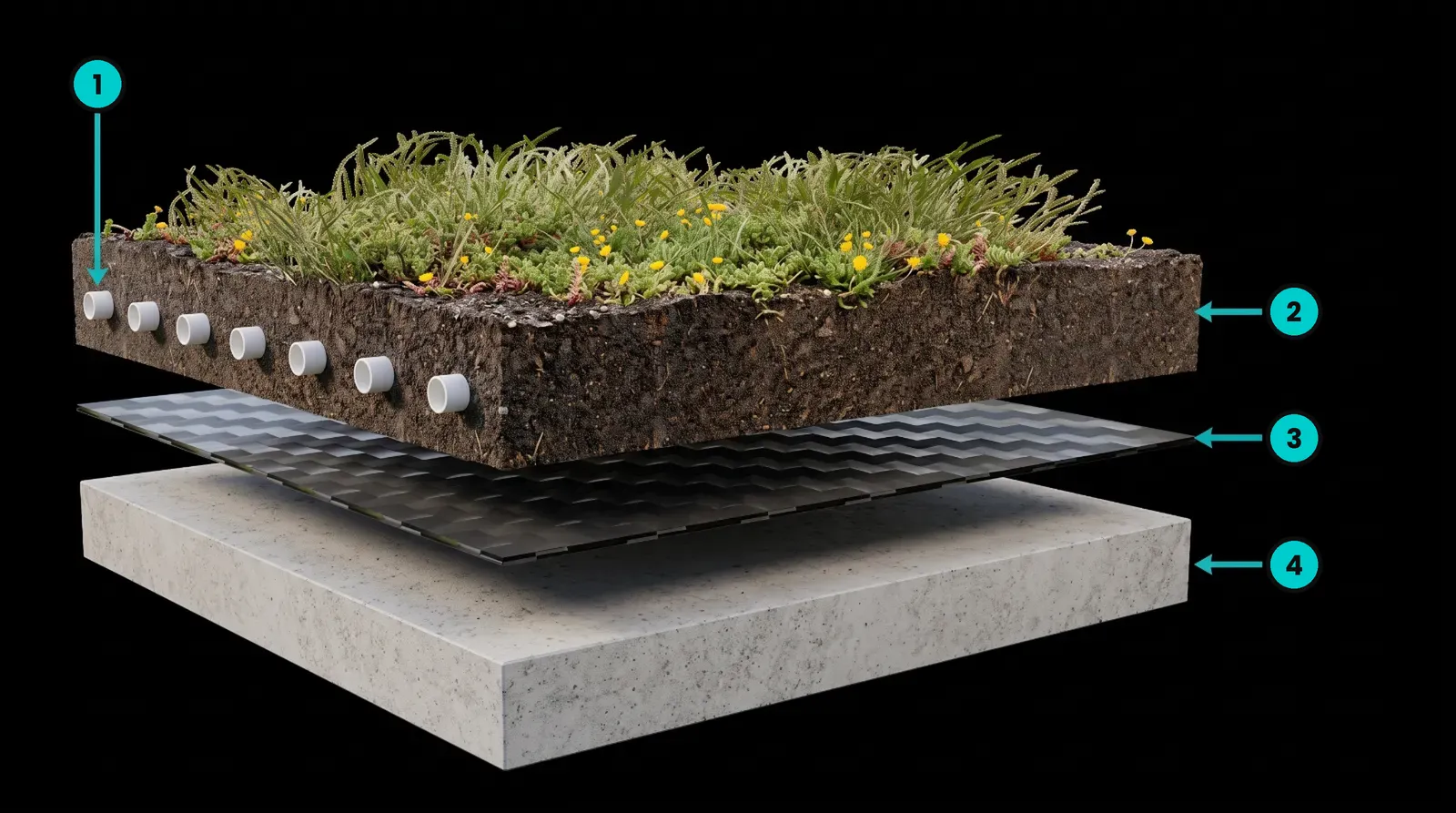
- Rainwater soaks down through the soil to the drainage pipes
- Planting soil
- Drainage board and filter fabric
- Concrete roof slab
A simpler build-up
MDP can be laid directly in the soil layer of a green roof to drain, store and recycle water. The separate drainage layer and filter membrane are no longer needed. In principle, a root barrier, soil and MDP are enough to start planting.
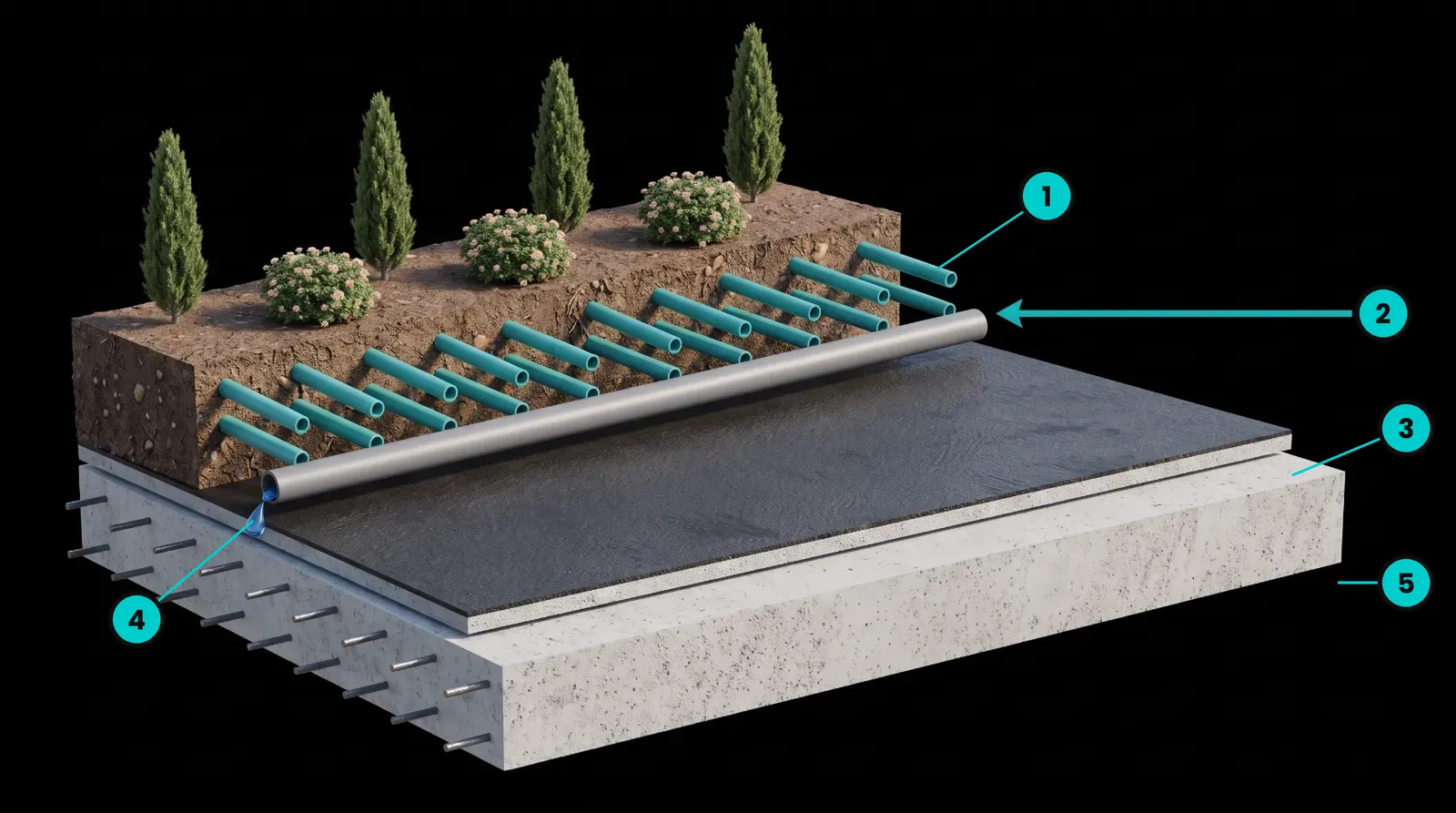
- MDP laid directly in the soil
- Collector pipe gathering the drained water
- Root barrier and waterproofing, the only layer needed under the soil
- Outlet to the roof drain or a storage tank
- Concrete roof slab
Layouts vary with the site and the planting. Pipes can be connected in a cross pattern or a serpentine pattern, and can discharge through several collector outlets or all run to a single outlet.
Using MDP to fill a tank
When MDP feeds a tank or reservoir, the pipes must sit above the stored water level. If the tank's water level rises above the pipes, flow stops. Kept below the soil water and above the tank, filtered water runs into storage naturally.
This approach could give cities a better way to manage and use rainwater, reduce the load on drainage networks, and create more green space.